onsdag den 26. august 2015

Mayson and Madeira

Wine writer Richard Mayson is the author of several books about Portuguese wine and port. “The Wines and Vineyards of Portugal” and “Port and the Douro” are both excellent books, written by and expert in wine and in Portugal. Recently Mayson released a new book, and it was not a surprise that it was about madeira – the other great fortified wine from Portugal. Mayson writes about both port and madeira for the wine magazine Decanter.  
The new book, “Madeira”, has a lot in common with the book about Port. Both begin with a historical chapter followed by chapters about vines, vineyards and vinification, presentations of producers and vintages and some notes about wine tourism. Besides that the book contains small portraits of “Men who shaped Madeira” – like the portraits of port personalities in the last edition of his book about port. But of course there are differences as well. The vinification of port and madeira is not the same, and the types are different. Furthermore there is a big difference when it comes to the amount of tasting notes in the two books.
The island Madeira was official discovered in 1420, and soon afterwards the first vines were planted. As early as 1450 wine was exported from the island, but as with Port it is not possible to tell when Madeira was “invented”. As Mayson writes:
“Suffice to say that madeira probably followed the same trajectory as port, which gradually evolved into a sweet, fortified wine from the end of the seventeenth century onwards.”
The first time it is mentioned, that the wine was fortified is in 1530, and it is not until 1730 that it became normally to heat the wine – at first by the sun (vinho do sol) and later artificially (estufagem).
Among the grapes recommended are the white varieties Sercial, Verdelho, Malvasia and Boal, the red Tinta Negra and other varieties like Terrantez, Bastardo, Moscatel and Listrão. The types of Madeira range from the very dry ones (Sercial) and the medium dry ones (Verdelho) to the the medium sweet (Boal) and sweet ones (Malvasia). The cheapest wines are normally 2-3 years old, while the quality categories are from 5 until 50 or more years old. Besides that you have Colheitas from a single year, Soleras and Frasqueira, where “the wine must be made form a single “noble” variety and aged in wood for at least twenty years before bottling.” This category used to be called Vintage until IVDP (the Port Institute) objected.
In the second half of the book, Mayson describes the producers one by one. Late in the 19.th Century there was more that 150 producers, but now there are only seven companies that export Madeira – one of them, Madeira Wine Company, covering a broader palate of brands. One of them is Blandy, which has a special position in Richards Mayson´s heart, due to the fact that he is married to the daughter of the late Richard Blandy.
After each description of the producers there are tasting notes on the available wines from the company and in the following chapter notes on “Vintage madeiras and historic wines”. The many tasting notes in this second part of the book changes it into a work of reference instead of a book that you read from A to Z.
The first half of the book is great reading if you want to know about the history of madeira, vines and wines. And you can use the second part to compare tasting notes if you suddenly have the change to try a Lomelino 1914 Bual. The book is deep and full of knowledge – and well written as well.

Richard Mayson: Madeira – the Islands and their Wines. The Classic Wine Library, Infinite Ideas Limited 2015, 258 sider.


You can by the book from webshops and directly from the author from his own site 

torsdag den 6. august 2015

Modern Cathedrals of Wine

Around the world there are a lot of beautiful buildings hosting wineries and many of them are designed by architects. Some of them are old, but more often they are designed and build in the last couple of decades. In La Rioja in Spain you will for instance find Bodegas Ysios designed by Santiago Calatrava and Frank O. Gehrys City of Wine.
I spent my summer vacation in the north of Spain close to Tarragona. Driving around I came across two very different but both beautiful designed wineries.


The first is called Cathedral of Wine and is situated in Nulles in Tarragona DOP. It was built in 1917, when the local farmers decided to union and build a winery and cellar. The architect behind the modernistic building with references to cathedrals, Cèsar Martinell, was a pupil of Antoní Gaudi who created the famous La Sagrada Família and other buildings in nearby Barcelona. Cèsar Martinell created several cathedrals of wine around in Catalonia. The one in Nulles is hosting Adernats, a company that produces both Cava and still wines made of varieties as Macabeu, Xarel·lo, Moscatell, Parellada and Chardonnay among the whites and Ull de LLebre and Merlot among the reds.


Driving inland to Aragon we passed another very modern winery in Somontano close to Barbastro between Huesca and Lleida – Sommos Bodega, designed by Jesús Marino Pascual. The building is very futuristic, spreading its wings out in the middle of the vineyards like a giant butterfly. Sommos is producing both white, rosé and red wine. For the whites they use varieties like Chardonnay and Gewütztraminer – a speciality in Somontano just south of the Pyrenees. The reds are based on international varieties like Merlot, Cabernet Sauvignon and Syrah and off course Tempranillo.


I only tasted a couple of wines from Sommos – a white and red blend in the entry level under the name Glárima. The white was a blend of Chardonnay and Gewütztraminer. It had the spicy character, but was lacking acidity in my opinion. The red was a blend of Tempranillo, Merlot, Syrah and Cabernet Sauvignon. Dark and intense with a lot of dark fruit, but with too much flavours from the oak.


Why do the companies invest a lot of money in creating a special designed winery? One of the reasons is to send a message about high quality and exclusiveness. Another is pure marketing. Wineries are often places in open spaces just surrounded by vineyards, which gives the architect a chance to create an eye-opener. I stopped at Sommos and paid them a visit; because I noticed the building from the main road and I might even unconscious recognize it form pages on the internet paying attention to wineries and architecture.
Finally another trend is connected. Wine tourism is growing and modern wineries like Sommos includes a shop, a restaurant, a gallery and even the possibility to ride in the vineyards on the back of a horse. Other new wineries are including small hotels. The competition among wine producers is not just a matter of quality and price. It is a matter of event and entertainment too. It is a matter of combining the possibility to taste wine with cultural experiences in the modern Cathedrals of Wine.


tirsdag den 30. juni 2015

Cask 33 – a very special cask

These years the Port companies are releasing old and exclusive Tawny Ports. The tendency started in 2010 with Taylor’s Scion from 1855 and last year Graham’s followed with the family heritage, Ne Oublie, bottled from a cask from 1882 which Andrew James Symington bought in 1924 to celebrate the year that he arrived to Portugal.    


Earlier this year Sandeman bottled a very special cask of old Tawny too. Cask 33 is the name of the Port which can be seen as a sort of tribute to several generations of winemakers and blenders. The year of the release was not accidental. Here in 2015 Sandeman is celebrating its 225th year’s anniversary. The company was founded in 1790, when the 25 years old Scotsman, George Sandeman started to buy and sell Port and Sherry, and since the middle of the 19th century the company has stored casks with Port in their beautiful cellar in Vila Nova de Gaia. The family is still involved in the company, but today it is owned by Sogrape, who is behind Ferreira and Offley too not to mention several brands of still wine from all over Portugal.
Sandeman is known for producing both Vintage Port and tawnies. The last decade the quality of the former has risen again, but when it comes to the latter they have always had a good reputation. Therefore expectations were high, when Cask 33 was released. The cask is picked among other old casks that were put aside in the cellar in the 1960s and afterwards adjusted when needed by the winemakers of Sandeman. Normally they are used for blending tawnies adding some age and quality to the younger basic blends. But present winemaker Luís Sottomayor found the quality of Cask 33 extraordinary and decide to put it aside. The cask is a blend of 30 and 40 years old Port and older wine with more complexity with 60 or 70 years of age.


“This particular cask, from a lot of 40, hasn’t been touched for the last two years. Back in January, when our head winemaker Luís Sottomayor tasted it again, knowing that we were on the lookout for something special to celebrate our 225th anniversary, he found that cask nr. 33 showed such a promising evolution and great character that we singled it out for this limited edition”, explains George Sandeman.
The 635 litres from the cask were bottled in 685 hand blown bottles inspired by the original bottle, which was used in 1790. The seal bears the initials “G.S.” for George Sandeman and all of them are signed by winemaker Luís Sottomayor.
“For the first time in company’s history we are launching the bottling of a single cask, as Sandeman Cask 33, due to its superb qualities that epitomize the pinnacle of our style of Tawny Portos”, says Luís Sottomayor.


Besides the 685 bottles Sandeman produced some small examples for journalists and wine writers. I was kindly given one by George Sandeman. Here are my tasting notes:
Bright, clear, golden and amber. Intense with almonds, orange, walnut, spices and cigar box notes in the noise. Silky in the mouth, elegant but with a great body and notes of almonds, orange, pepper, honey and Muscat. Perhaps not as deep and intense as expected, but tempting and with complexity. A bit sweet but nice balanced with a fine, long aftertaste.


tirsdag den 10. marts 2015

La Querce in Tuscany

If you have been travelling in Tuscany, you know that the beautiful landscape and all the tempting vineyards start just outside Florence. Driving south you are in Chianti DOCG, which is divided into several sub regions. Just before entering the most famous part, Chianti Classico, you can find the old estate La Querce in Chianti Colli Fiorentina.


Last week the winemaker from La Querce, Marco Ferretti, visited Odense, where he took part in a winemakers dinner and a tasting at Vinotek A Fynnis. I met Marco Ferretti and tasted three of his wines.
But first a few word about the estate. La Querce dates back to 14th century and the oldest document mentioning wine production is from 1518.  The name refers to an old oak three that used to be growing on the estate, which is 42 hectares big of which about 7 hectares are vineyards, mostly facing south. In 1962 the estate was bought by Gino Marchi, who invested money in renovating the place. Today it is owned by his son Massimo Marchi and managed by Marco Ferretti. Besides wine the estate produces olive oil and Grappa. The total production of wine is 35.000 bottles a year of which 75-80 % are exported, mainly to Germany and USA.
Marco Ferretti told me, that his aim is to produce wine after the ”Sangiovese philosophy” with a good balance between the fruitiness from the grapes and notes from the oak. The three wines I tried were:

Sorrettole Chianti DOCG: Made of 80 % Sangiovese, 10 % Colorino and 10 % Merlot, matured in stainless steel. The entry level is straightforward Chianti with fruit and cherries in the nose. Fresh fruit on the palate, dry and with soft tannins. 
La Torretta Chianti Colli Fiorentini DOCG: Made of 90 % Sangiovese, 5 % Canaiolo and 5 % Merlot, aged 14 months in French barriques. Dark rubin, cherries and notes from the barriques in the nose. On the palate good balance between mature fruit and darker notes like vanilla, toast and coffee. A good structure and very easy to drink.
La Querce Toscana Rosso IGT: Made of 95 % Sangiovese and 5 % Colorino, aged 18 months in French barriques. Dark ruby with a great nose of red fruit and berries, spices and vanilla notes. Soft tannins and a more complex structure with mature fruit and spices and a long tail.
The time in barriques was distinct in the last two wines, but they were not overoaked and the fresh fruit and the typical Sangiovese taste was still present. And that is how it shall be in my opinion. 
Besides these three wines La Querce produces a Toscana Rosso IGT based on 100 % Merlot and a sweet Passito called Dama Rosa based on 100 % Canaiolo.


Read more about La Querce here

fredag den 6. marts 2015

The taste of memories

Some months ago I was invited to the Danish release of Ne Oublie – the old heirloom Port from Symington Family Estates and Graham’s. My article about the Port is now published in the Danish magazine Vinbladet. Here I will just share some thoughts and off course my tasting notes.
Two things came to my mind during the presentation, which took place in Tivoli in Copenhagen.  First of all it was matter of storytelling more than just a tasting of a very good old Port from 1882. Secondly especially the short film, that has been produced to promote Ne Oublie, gave me an impression of what the Portuguese call saudade. The word can’t be translated with just one word, but it is connected to emotions like sadness, longing, nostalgia and melancholy – emotions that you will find in Fado music as well. In the film the Symington’s are talking quietly about the Port, its history and their family through generations, and the pictures and sound includes beautiful details like dripping water, ringing bells and chirping birds, The sun above the vineyards, the floating river and old gates. It is a tale about a time and a place long away from the modern world, a tale of memories and heritage.           
Off course the release of the Port itself is neither sad nor nostalgic. The Symington’s decided to share one barrel out of three remaining with Port lovers who are invited like me or can effort to buy a bottle. But when you taste and drink the Port, you are not just drinking a special and very good wood-aged Port. Due to the whole storytelling you feel that you are sharing the family’s history and sipping down a tiny bit of their heritage.   


The story of Ne Oublie is, that Andrew James Symington - the first from the family to settle in Portugal – in 1924 decided to buy four barrels of Port from 1882 – the year he arrived and started to work for Graham’s. The barrels has been stored in Gaia ever since, but one has been used to tip the other three up and off course for tasting now and then. The present generation decided to bottle one barrel and release 656 very exclusive bottles of Ne Oublie including a handmade crystal decanter from Portugal, engraved silver rings from Scotland and a special designed and handmade leather box from Bond Street
“It is a family jewel, so the whole presentation had to be special too. At first we considered to release it as a Symington Port, but then we chose Graham’s. That is where the story starts and now it is full circle”, Dominic Symington said during the tasting.     
Dominic told me, that the decision to bottle one cask was made, because other companies are releasing some very old wood-aged Port as well. The cask was not official documented by IVDP, which is the reason why it is not called a Colheita from 1882.


But who needs documents when the story is good and the wine excellent. It is very dark brown, balsamic, with an orange rim. Very expressive in the nose with dried fruit, almonds, prunes and again balsamic notes. In the mouth it was fat and full-bodied, soft and creamy, very concentrated on the palate with notes of orange, figs, honey and almonds. All in all it is a very complex and surprisingly fresh Port with an impressive acidity to balance the sweetness. And it ends of couse with a very long and intense tail. A wine to remember.  


You can read more and see the film here

fredag den 20. februar 2015

Winemakers Dinner with Sandeman

In February Mr. George Sandeman was our guest at the annual Winemakers Dinner in The Vintage Port Club. At first we had a tasting of Sandeman Vintage, Vau Vintage and Tawny with indication of age, and afterwards a delicious dinner served with wines from Sogrape and more Port from Sandeman at restaurant Kok & Vin (Chef & Wine) in Odense.   


Sandeman was founded in 1790 by the Scotsman George Sandeman, who established himself as a wine merchant in London and started to import Port. In 1811 the company moved into the beautiful arcaded building in Vila Nova de Gaia, where Port lover and tourists are visiting the house every day. In 1928 the artist George Massiot Brown created the famous Sandeman Don who soon became an icon. The Don wears the cape of the Portuguese students and a Spanish Caballero hat and thereby unites the two fortified wines of the company: Port and Sherry. Sandeman used to produce more Sherry than Port, but today it is the other way around, George Sandeman told us during the tasting.


George is the 7th generation of the family. In 1980 the Sandeman was sold to Seagram, and from 2001 it has been part of the Sogrape Group, who own Ferreira and Offley as well. Besides that Sogrape is producing still wine all around Portugal including the well known brand Mateus.
George Sandeman admitted that during the 80´s the focus was more on volume and less on quality – a fact that probably has given the brand a reputation in Denmark of being a more commercial brand. But – as the tasting proved – the quality used to be very high. And perhaps more important the quality of the Vintage Port is high again like it always has been when it comes to Tawny with indication of age. Since 1994 George Sandeman and winemaker Luis de Sottomayor have done a great job and raised the brands reputation. I have tasted the Vintage 2011 several times, and I am impressed of the concentration of fruit and flavours. It sure will last for many years.


Vintage 2011 was not included in this tasting, but so was a long list of fine bottles, served in the order they are mentioned below.
Sandeman Vintage 2000: Dark ruby with great fruit, mature cherries and a bit cigar box. A nice taste with balanced fruit and acidity and a fine tail with pepper. Soft tannins and very drinkable right now, but will still develop.
Sandeman Vintage 1994: Performed better here than at the 1994 tasting last year. Red with brownish edge. A little milky in the nose at first, but with cherries and red berries. Fine mature and in good balance. Not that complex.
Sandeman Vintage 1982: One of the bottles were corked, the other one ok. Light red and muddy. Some red berries, but a bit anonymous and lacking power and fruit.
Sandeman Vintage 1977: Red with mahogany edge. A bit muddy and with some chemical notes in the nose. On the palate it had more complexity but not a deep wine. Mature and in fine balance.
Sandeman Vintage 1975: Light in the colour as a tawny, but with a nice nose of red berries. Fine on the palate, but light and a bit one dimensional. A nice tail with pepper. A good Port for breakfast, as George said himself.
Sandeman Vintage 1970: Red with a light edge. More fruit and more body. A nice nose with dark berries and cigar box. A very fine mature Port.  
Sandeman Vintage 1966: A bit limpid, but with a nice red colour. Very intense and deep. Fruit and red berries in the nose and again some cigar box notes. A great structure and still with a lot of fruit, some spices and a fine balance. A great and delicious mature wine.
Sandeman Vintage 1934: Brown and with a Tawny nose as well. At first not that intense in the nose, but very concentrated and intense on the palate. Some fruit but more Tawny and chocolate notes.
Vau Vintage 1988: The first Singe Quinta Vintage from Vau. Later it changed into a brand for those who want to drink their Vintage young. Dark Ruby. A bit milky in the nose and still with powerful tannins and a lot of fruit for developing.
Vau Vintage 1997: Dark ruby, almost opaque and with expressive dark berries in the nose. Straight forward with soft tannins.
Vau Vintage 1999: Dark ruby. A bit more anonymous in the nose, but started to open up. Not as much fruit as the 97, but again soft integrated tannins and a fine structure.
Sandeman Vintage 2003: Dark ruby, close to being opaque. Very intense in the nose with blackcurrant and other dark berries. Juicy and with a good body and tannins for a long life.
Sandeman Vintage 2007: Dark ruby and purple. Fruit juice and fresh berries in the nose, but spices too. Very young and with fruit, acidity and tannins for a long, promising life.
Sandeman 10 years Tawny: red-brown with both fruit and nuts and notes from the cask. A fine and elegant wine, but not that complex.
Sandeman 30 years Tawny: Brown, yellow. A nose with orange, vanilla and honey. Intense and creamy in the mouth with a nice balance. Orange, hazelnuts and dried fruits on the palate. A great glas.


After the tasting chef Steffen Falkesgaard and his team served a very delicious menu with five courses, wines from the Sogrape Group and two Sandeman Ports more:
  • Brandade of gently smoked cod with fennel pickle with Morgadio da Torre 2013, Vinho Verde
  • Poached fillet of cod with beurrenoisette, celeriac and fine herbs with Quinta da Carvalhais “Encruzado” 2012, Dão
  • Braised neck of beef with jus, mushrooms, tomatoes and pork crackling with Quinta da Carvalhais “Touriga Nacional” 2011, Dão and Quinta da Leda 2010, Douro
  • BrillatSavarin, aged Comté and Stilton with trimmings to match and malt bread with Sandeman Vintage 2000
  • Dark chocolate gateau with prune ice cream and local apples with Sandeman 20 years Tawny
  • Coffee or Tea with home made sweets to follow
During the dinner I did not take notes, but shortly I will mention the Vinho Verde as very good, fresh and fruity as an Alvarinho should be. The white ”Encruzado” had more body and notes from the cask, and the two reds were great examples of the high quality in Dão and Douro.


All together it was a fine tasting with some great ports among and a fine dinner in good company. 

onsdag den 21. januar 2015

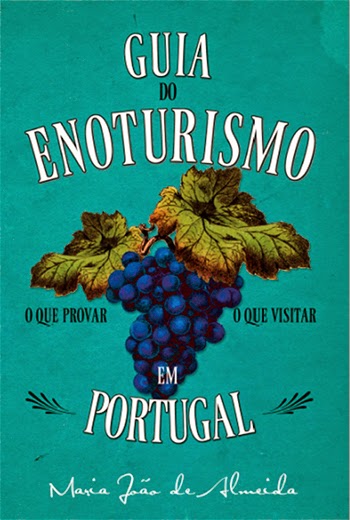
Guide to Wine Tourism in Portugal

With the deserved growing popularity of Portuguese wine, wine tourism in the country is growing as well. More and more people want to explore the many different faces of Portuguese wines, and naturally the producers are getting more professional when it comes to welcoming wine tourists.
A new guidebook testifies this. “Guide to Wine Tourism in Portugal” is written by the Portuguese journalist and wine writer Maria João de Almeida and is a tour around the different wine regions with presentations of a lot of different adegas and quintas. What the places have in commons is off course, that they produce wine, but more than that. They are those, who “know how to welcome guests, those with open arms and smiles on their faces, those who tell their history and make you taste their wines with the same passion and enthusiasm they produced them with”, as Maria is writing in the introduction.
In 12 chapters the book focuses on regions like Douro, Alentejo, Bairrada, Dão. Madeira and Algarve. Besides that Porto has its own chapter due to the Port lodges in Vila Nova de Gaia. All chapters have a short introduction with a little map, telling about the region, the grapes and the wines. After that follows openings with information about each chosen producer and finally some information about hotels and restaurants. All openings have information about the producer and the winemaker, the possibilities when it comes to wine tourism and suggestions for wine tasting. 
As an example we hear about the Bucasso Palace Hotel and the Baga grape variety in the chapter about Bairrada. After that we are introduced to Adega Luís Pato, where it is possible to visit his personal wine cellar and have a regional lunch with roast suckling pig.
The adegas and quintas are both well known and less known. In the Douro, which is the region where I have the best first hand knowledge, the book visits quintas like Crasto, Panascal, Seixo and Ervarmoira and places like Quinta do Pôpa and Quinta do Pessegueiro. In Porto it mentions the following lodges: Cálem, Ramos Pinto, Ferreira, Real Companhia Velha, Sandeman, Graham´s, Taylor´s and Porto Cruz. They are different when it comes to size and quality, but they all have something to offer visitors – and that is exactly the point.  
When it comes to restaurants in Porto the author has chosen to focus on the Gaia side as well, which in my opinion is a pity. Of course places like Taylor´s Barão de Fladgate and Graham´s Vinum are naturally choices, but I miss some very good places on the other side of the Douro like O Gaveto in Matosinhos – just to mention one.


The layout is beautiful and rustic with tinted pages and stains of wine. It sends the signal that it is a book for use, but now and then it unfortunately makes it more different to read. Another minus is a small mistake on one of the maps. You will find Quinta do Portal in the Douro somewhere between Sambrosa and Pinhão and not North West of Peso da Régua as shown on the map. A minor detail perhaps, but not unimportant in a guidebook.
All in all it is great and tempting book. If you are reading it back home – perhaps with a glass of wine or Port in your hand – it gives you inspiration for your next trip to Portugal. And you can have it with you on the road too.
For someone like me who both enjoy travelling in Portugal’s different landscapes and regions and who are passionate about Portuguese wine and Port, it is a joyride to read the book. Until now it is published in Portuguese and English, but it deserves to be translated into other languages as well.

Maria João de Almeida: Guide to Wine Tourism in Portugal. Zestbooks 2014, 357 pages.